
What is Rust?
Rust is a modern, multi-paradigm programming language created by Mozilla Research in 2010. It is a fast and robust systems language designed for everything from web development to deeply embedded devices.
The "secret sauce" of Rust is its ownership system, which ensures memory safety without a garbage collector by managing memory during compile time. This prevents common issues like data races, memory leaks, and buffer overflows. Additionally, Rust utilizes zero-cost abstractions, allowing developers to use high-level structures while maintaining the efficiency required for hardware-level tasks. While not a classical object-oriented language, it incorporates functional programming ideas, pattern matching, and algebraic data types.
Why Rust?
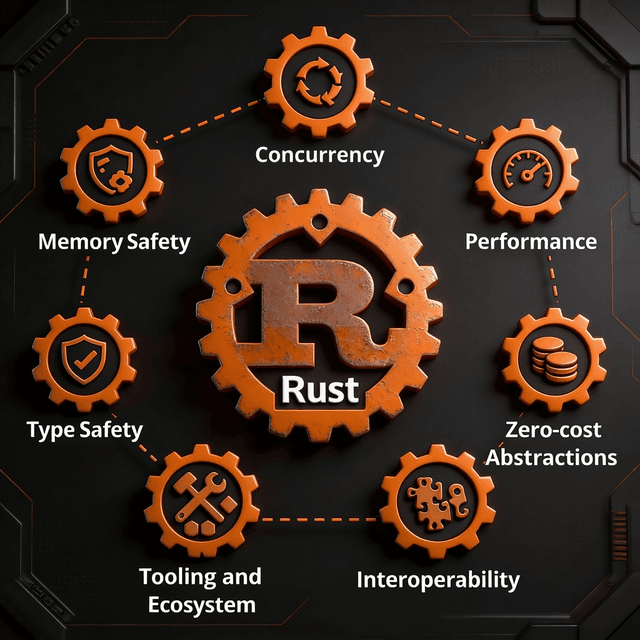
In Rust, the burden of safety shifts from your memory to the compiler's logic. While C and C++ give you total freedom to manage hardware resources, that freedom often leads to human errors like "use-after-free" or "buffer overflows" which can crash a car's ADAS or a factory's multi-head weigher. Rust introduces a strict ownership model where the compiler acts as a rigorous auditor: it tracks every piece of data and ensures it has exactly one owner at a time, automatically cleaning it up the moment it is no longer needed. It uses borrowing rules to make sure you cannot accidentally change data while another part of your code is reading it, effectively killing off common bugs like data races before they ever reach your PCB. Best of all, these checks happen during compilation, so you get the same lightning-fast performance as C without the runtime crashes or security vulnerabilities that usually haunt embedded systems.
Security by Design: The White House has identified Rust as the most secure common programming language in its national cybersecurity strategy.
Safety Over Discipline: Rust’s compiler enforces safety rules at build time, whereas C and C++ rely on developer discipline to avoid errors like null pointer dereferencing.
Reliability in High Stakes: Rust is trusted in extreme environments, such as the RROS project powering the Tianyi-33 satellite.
Economic Sense: Industry leaders like Volvo Cars suggest Rust can produce higher quality code at a lower cost by reducing warranty expenses.
Superior Concurrency: Rust’s built-in parallelism features prevent data races by ensuring two threads cannot access the same modifiable data simultaneously.
Modern Tooling: Unlike the manual customization of make-files often required in C/C++, Rust includes Cargo, which simplifies dependency management and project creation.
Current Maturity and Embedded Adoption
Rust has evolved from a newcomer to a proven standard embraced by tech giants and innovative industries.
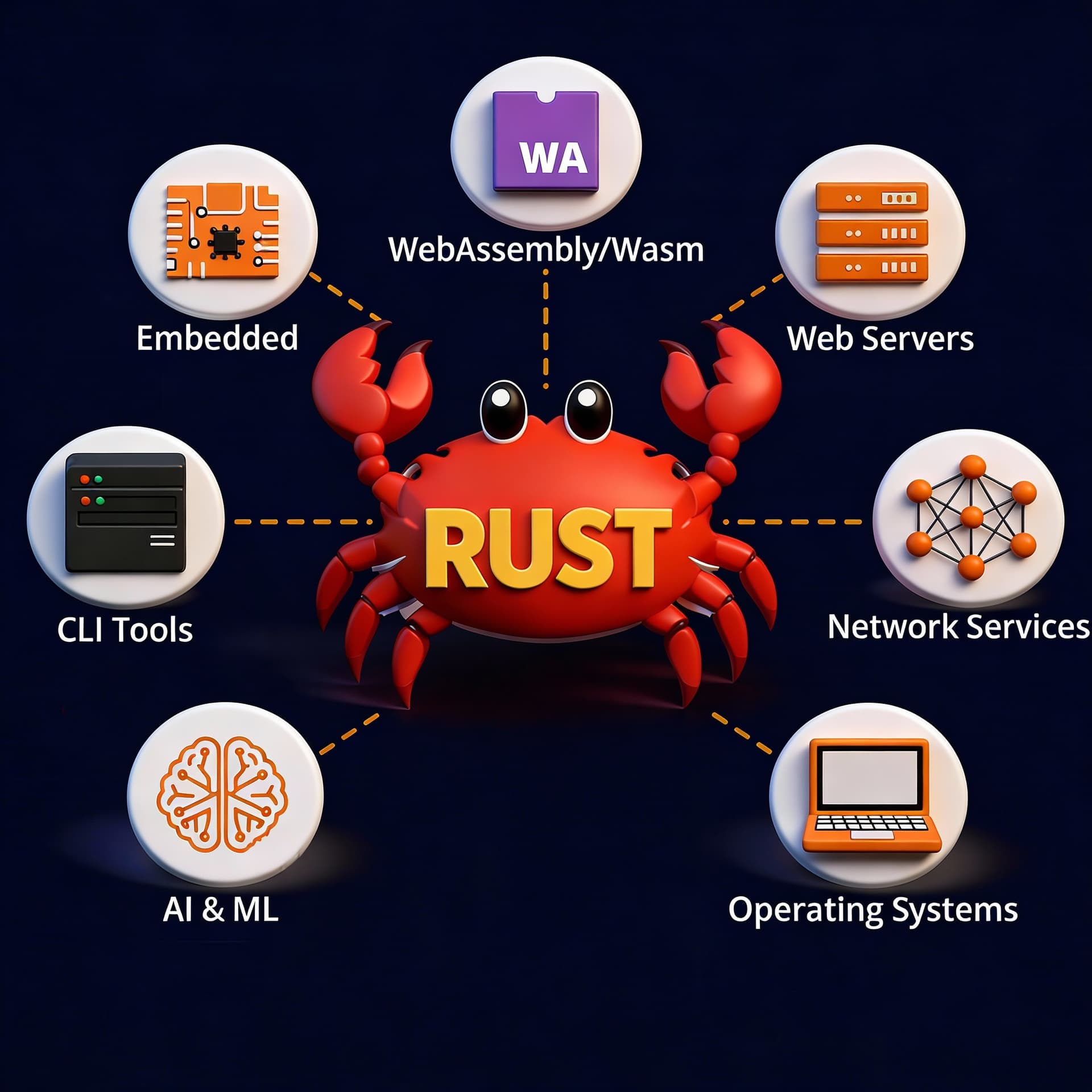
Linux Kernel: Rust's inclusion in the Linux kernel alongside C signifies a high level of trust and maturity.
Industry Giants: Microsoft utilizes Rust in Windows 11 and Microsoft 365, while Google has adopted it for secure Android development.
Automotive Leadership: It is becoming the choice for Software-Defined Vehicles (SDV), Battery Management Systems (BMS), and ECU diagnostics.
Rapidly Growing Talent: The number of professional Rust developers has surged from 600,000 in 2020 to approximately 3.5 million today.
Global Recognition: Rust's steady rise is reflected in its consistent ranking on the Tiobe Index and its status as a favorite among professionals in Stack Overflow surveys.
The Ecosystem: Frameworks and Hardware
The Rust community, known as "Rustaceans," provides a wealth of tools that facilitate embedded development.
Microcontroller Support: Rust supports manufacturers including Nordic, NXP, TI, and Infineon, which officially launched a dedicated Rust compiler for its AURIX automotive MCUs.
Embedded-HAL: A hardware abstraction layer that allows developers to write reusable code across various platforms.
Safety-Certified Tooling: Projects like Ferrocene provide ISO 26262 and IEC 61508 certified compilers for mission-critical applications.
Modern Frameworks:
Embassy: Leverages Rust’s async/await for modern embedded development.
RTIC: A concurrency framework for building real-time systems with zero-latency overhead.
EVA ICS: As of September 2023, the world's first industrial automation platform written entirely in Rust.
Closing Thoughts
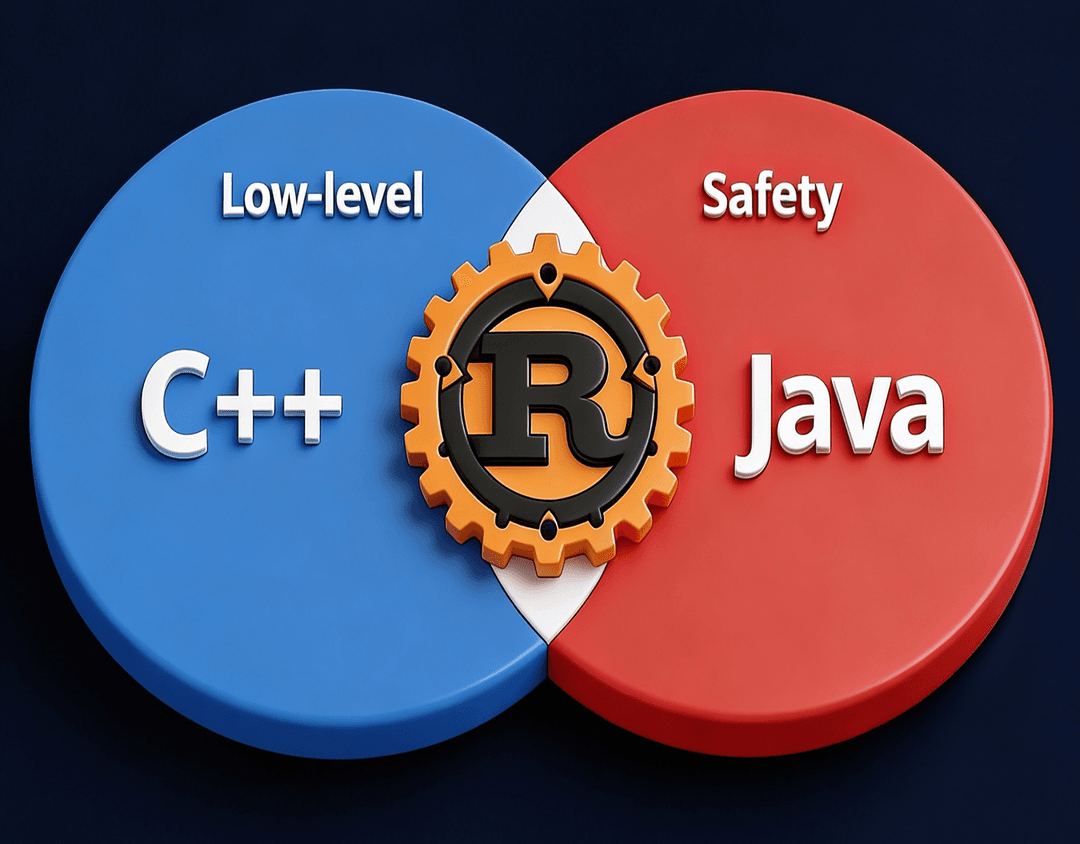
Adopting Rust involves a learning curve due to its rigorous ownership and borrowing rules. However, Google's research shows that a third of professional developers become as productive in Rust as other languages within two months.
As we move toward a world of autonomous technologies and IoT integration, the cost of software failure is too high to ignore. Rust offers a future-proof, stable, and scalable solution that ensures systems run reliably without failure.