Engineering Excellence
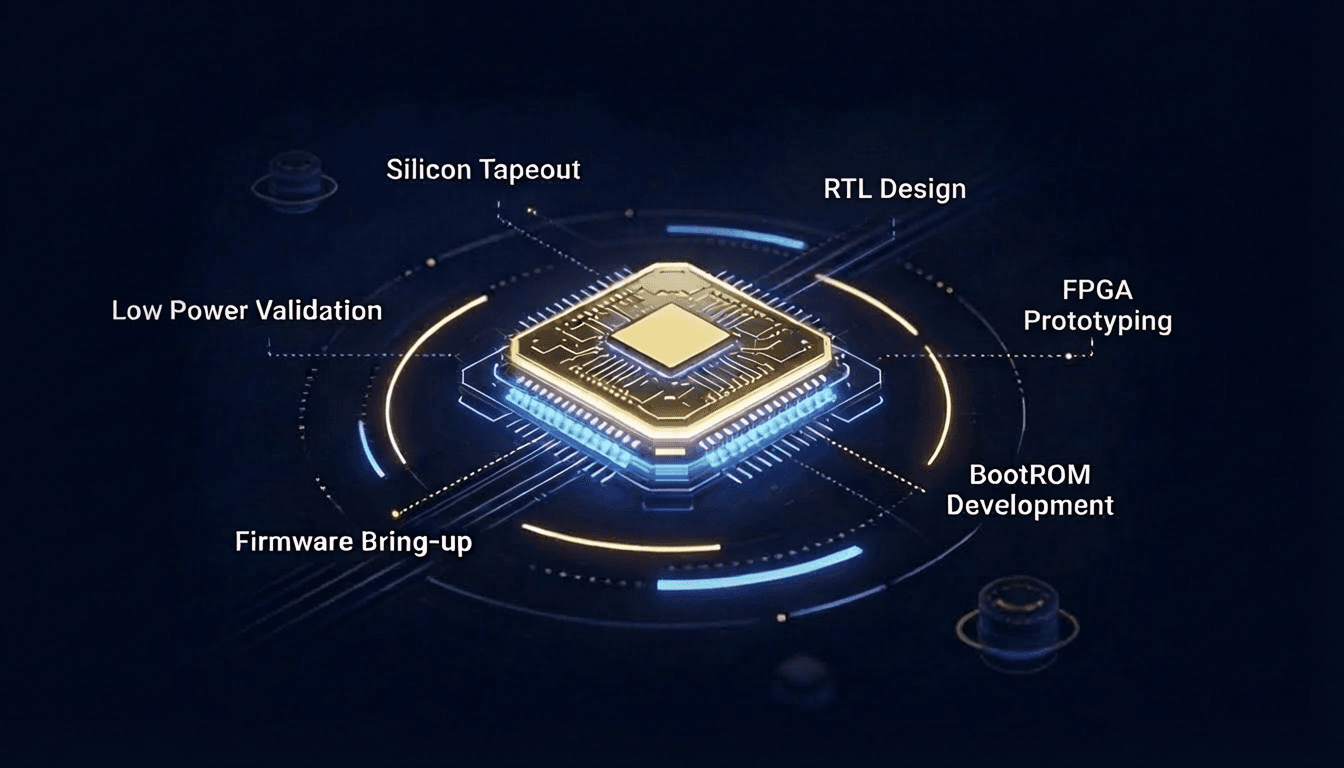
TOSIL Systems, part of CG Power Family, provides specialized semiconductor engineering services across silicon, embedded systems, and AI.
System & Product Engineering
End-to-end product realization with precision and performance.
Key Areas- Embedded Firmware
- Embedded Linux

AI Engineering
Intelligent solutions powered by data and innovation.
Key Areas- Edge AI Accelerators
- Machine Learning

Silicon Engineering
From RTL to tape-out, we craft silicon with purpose.
Key Areas- Turnkey ASIC Services
- RTL Design & Verification
- Power Optimization Techniques
- Physical Design & DFT

Autonomous Micro-Drone Ecosystem for Industrial inspection/Safety
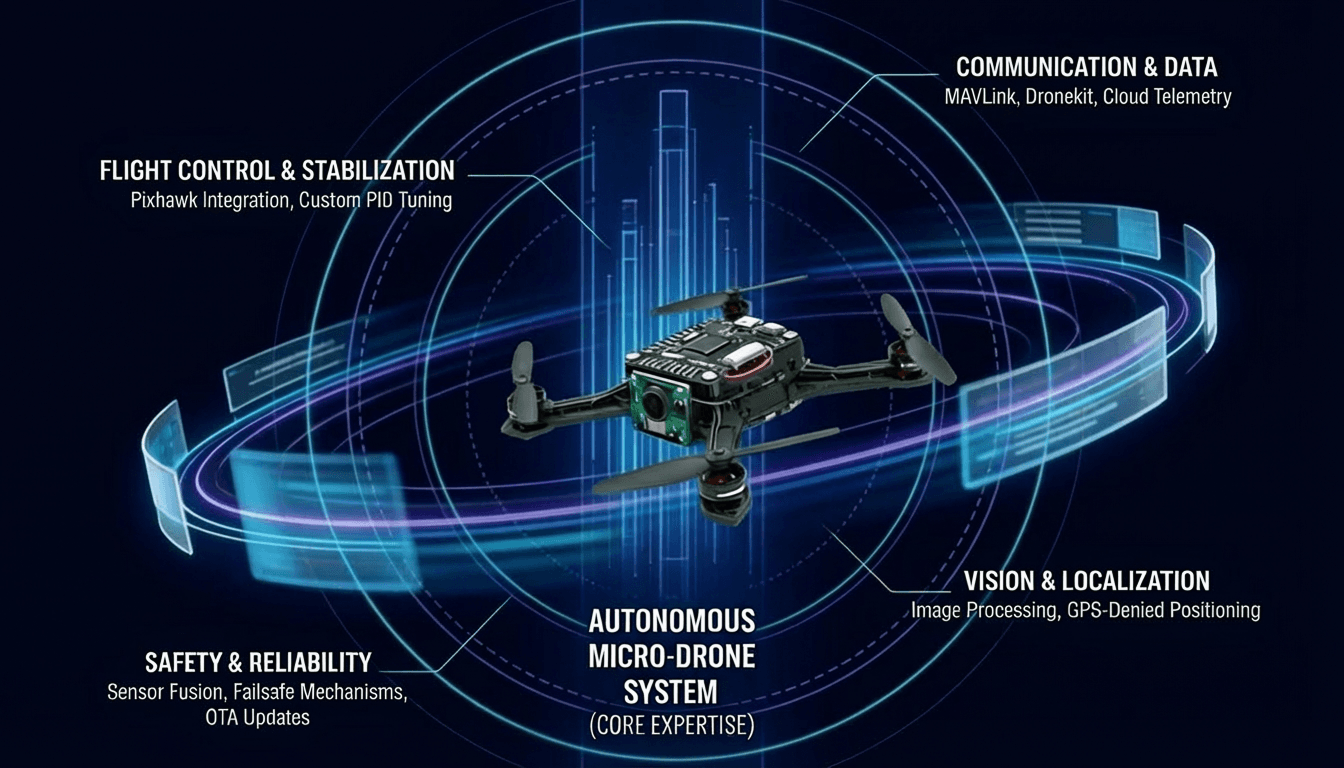
In the industrial safety domain, the need for autonomous surveillance within hazardous and enclosed environments continues to grow, while conventional drones often struggle to meet stringent size and integration constraints. To support a client addressing these challenges, our team collaborated as a development partner, providing specialized engineering services to accelerate their micro-drone program.
Our engagement focused on contributing to a highly miniaturized system architecture defined by the client, including hardware design support for the flight controller and sensor-interface circuitry required to integrate detection and imaging sensors. We also assisted in shaping the firmware and software stack, supporting flight-control tuning and Linux-based system integration to help achieve stable and responsive operation.
In addition, we provided targeted support for vision-based positioning through image-processing pipelines and camera-calibration tooling, aligned with the client’s overall system design. Connectivity and system management features—including DroneKit-based communication, ground-station integration, cloud telemetry enablement, wireless charging support, and Over-the-Air (OTA) update mechanisms—were developed in close coordination with the client’s teams to ensure seamless integration into their product roadmap
IoT-Based Occupancy Monitoring Ecosystem
In the rapidly evolving world of smart infrastructure, the demand for reliable, low-power, and scalable occupancy monitoring solutions is accelerating. Conventional sensing systems often struggle to deliver long battery life, secure connectivity, and seamless scalability across large commercial and industrial environments.
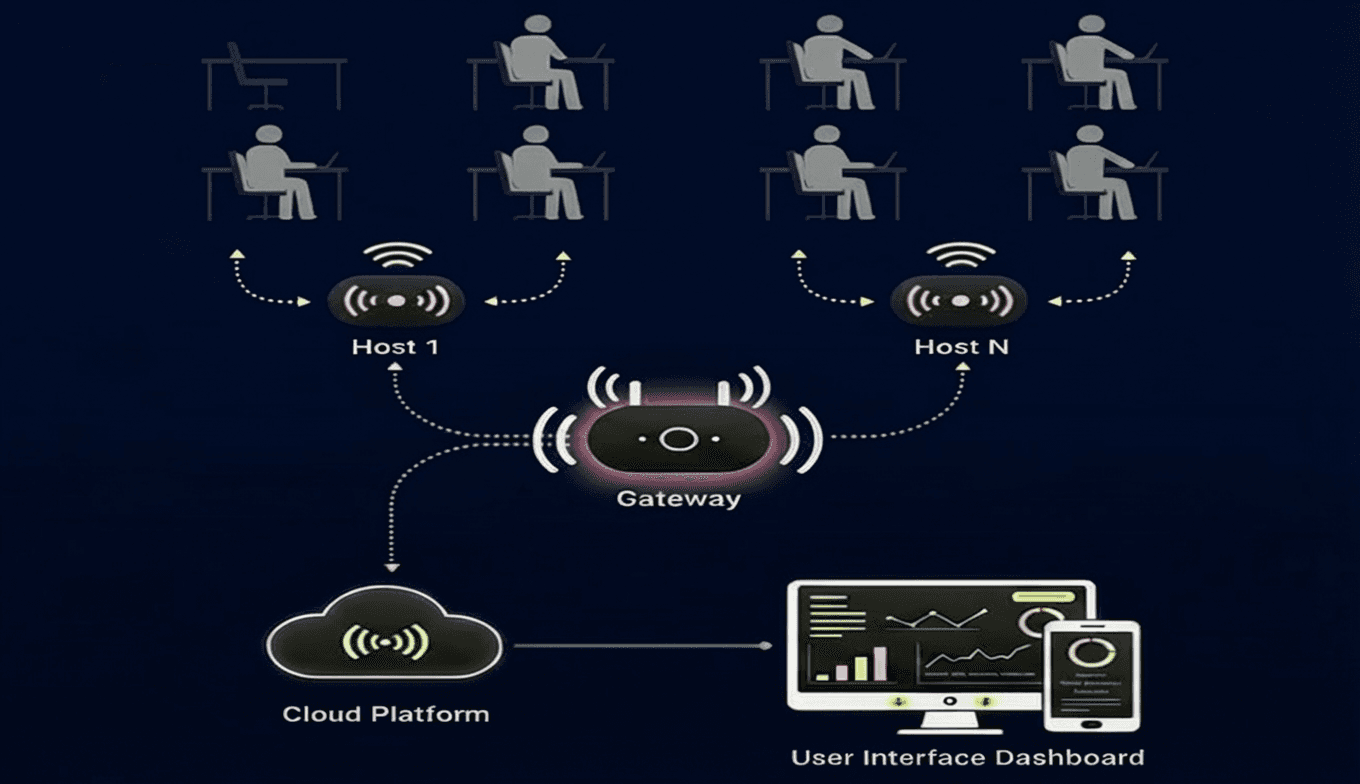
A comprehensive project was undertaken to engineer a full-stack IoT occupancy monitoring ecosystem tailored to these challenges. The development centered on ultra-low-power embedded endpoints integrating PIR sensors with optimized MCU architectures to enable multi-year battery operation, while maintaining reliable detection and communication.
To support large-scale deployments, the team designed a robust wireless and edge infrastructure, featuring Sub-1 GHz RF connectivity, intelligent host aggregation, and a secure gateway architecture. Cloud connectivity was enabled through MQTT/HTTPS protocols, allowing real-time data streaming, centralized monitoring, and remote configuration. The system was further strengthened with multi-level security, local buffering, and remote update capabilities to ensure seamless lifecycle management.
End-to-End Silicon Realization for Edge AI
To meet the demands of real-time edge AI voice recognition, engineering services were provided to develop a custom 32-bit RISC CPU based SoC with an integrated neural network accelerator. The work included system architecture definition, IP evaluation and selection, RTL development, and full SoC integration around the CPU subsystem.
BootROM design and development was done to enable secure boot, system management, and key peripheral interfaces. Low-power design techniques were applied throughout, and FPGA prototyping was used for early functional validation. The design then progressed through synthesis, place-and-route, tapeout, and silicon bring-up, supported by comprehensive bench-level testing.
The outcome was a production-ready, low-power SoC with stable firmware, leveraging expertise across ARM, RISC-V, and ARC architectures to accelerate deployment for edge AI voice-processing applications.